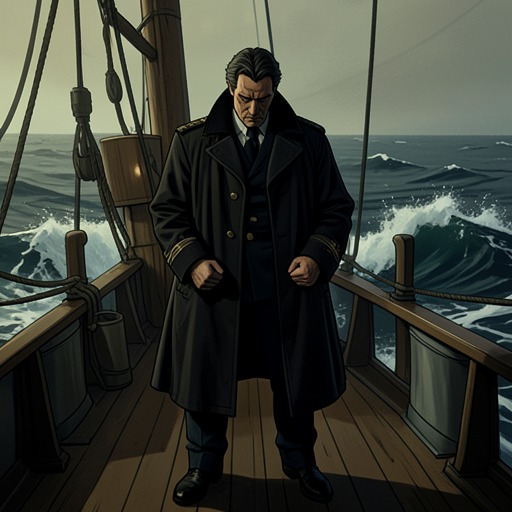
“The dead which he slew at his death were more than they which he slew in his life”
The Good ShepherdThe expression “The dead which he slew at his death were more than they which he slew in his life” frames the U-boat captain’s final shot as a grim reversal. As his submarine is destroyed, his last act strikes Keeling, making the deaths he causes at the end outweigh those attributed to him in life.
Biblical Language and Its Reversal
The sentence echoes the biblical account of Samson, whose death brought down more people than he had killed during his life. Here, that pattern is recast in the dying U-boat captain’s final act: he fires at Keeling amid the shellfire and hits the ship. The allusion gives the moment a stark, compressed shape—destruction does not silence the enemy before he can inflict one last loss.
The Final Shot
The surrounding passage emphasizes the discipline and composure behind the shot. Despite the bursting shells and what may have been a jammed training mechanism, someone aboard the turning submarine catches Keeling in his sights and presses the firing pedal. The captain and his crew are lost with the U-boat, but the hit leaves dead aboard Keeling; the expression measures the lethal consequence of that final resistance rather than celebrating it.
Narrative Significance
The line links victory with cost. The U-boat’s destruction is certain, yet the final shot makes the defeated vessel dangerous to the last, and turns the captain’s death into the moment of his greatest harm. For Krause, the thought is not an excuse to linger: the dead are aboard his ship, and he has stood idle while damage remains to be inspected. The biblical echo thus sits beside immediate command responsibility, joining a grand image of death to the practical work that follows it.